
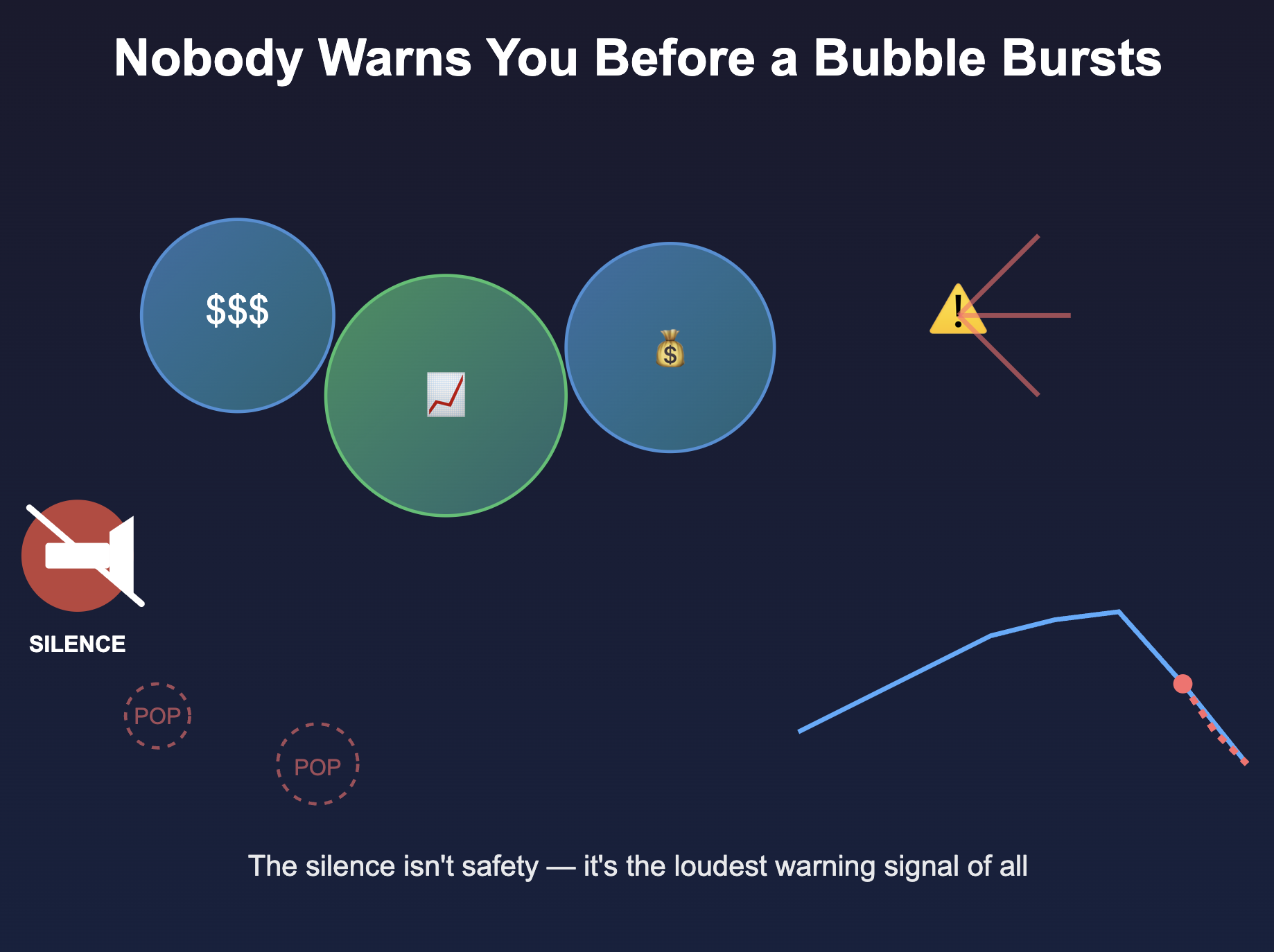
The most devastating aspect of any financial bubble is the utter silence preceding its collapse. When the markets are at an all-time high and everyone is making money, you won’t hear any warnings. This isn’t a mistake or an accident; it’s just how financial markets work when there are bubbles.
Every serious investor needs to know what constitutes a financial bubble. However, it’s peculiar that investors tend to overlook warnings when they could be most beneficial. This poses a significant risk for investors, who must develop the ability to discern hidden warning signs that others may overlook or refuse to acknowledge.
Money is vital; the more you have, the more options and goals you can achieve. That’s why it’s important to know how bubbles work, not just for school. It’s important for keeping and growing your wealth over time.
Why Market Experts Don’t Speak Up When Bubbles Happen
Investors have always had trouble with market bubbles, whether they were tulips or tech stocks. However, the pattern has stayed the same. When asset prices start to rise dangerously, the people we depend on for advice—analysts, fund managers, and the financial media—stop being watchdogs and start being cheerleaders.
During bubble periods, analysts’ recommendations become overwhelmingly positive, short-seller activity goes down, and media coverage becomes uniformly bullish. This is called a “fire alarm wired backwards” because the louder the all-clear signal, the more dangerous it is.
When bubbles form in financial markets, they give the false impression that growth will never stop. Professional investors frequently identify an investment bubble yet choose to remain silent due to career motivations. Think about the dot-com boom: even smart investors who knew that tech stocks were overvalued kept telling people to buy because the risk of being wrong early (and losing money in the short term) was higher than the risk of riding the bubble to its inevitable end.
Three powerful forces collaborate to prevent warnings from reaching their intended audience. Any investor who wants to get through bubble periods successfully needs to know about these forces.
The Psychology Behind Warnings About Financial Bubbles
The psychology behind a market bubble makes professionals very likely to stay quiet. Three interconnected forces combine to ensure that warnings remain unheard until it’s too late.
Cognitive Forces: The Extrapolation Trap
It’s natural for us to think that things will keep going the way they have been. When markets have been going up for months or years, analysts and investors start to think that this trend will last forever. The issue with an investment bubble is that this cognitive bias prevents early warnings.
Smart investors prepare for the potential burst of a financial bubble before warning signs become evident. They know that when everyone thinks growth will continue, the foundation for it has probably already fallen apart. This extrapolation bias affects even smart professionals who should know better.
Institutional Forces: Managing Career Risks
Smart investors can learn to spot the things that all market bubbles have in common, but professionals often don’t speak out because of institutional pressures. Fund managers, analysts, and advisors have a simple choice to make: getting the timing of a bubble wrong can end their careers, but riding the bubble up (even though they know it will eventually crash) is often rewarded in the short term.
When a financial bubble bursts, the damage to unprepared portfolios can last for decades. However, the way institutions work rewards short-term performance over long-term risk management. Such behaviours make people more likely to be optimistic during the worst times in the market.
Strategic Forces: Making Money by Being Quiet
The strategic part is probably the most worrying: smart investors who know when a bubble is forming often make money by staying quiet. They might quietly lower their own risk while still telling other people to buy. This strategy isn’t always detrimental; people often say it’s to make markets more liquid or to meet client demand for popular investments.
When asset prices get too far away from their true value, an investment bubble usually forms. However, those who see this disconnect first have strong reasons to stay quiet while they get into a beneficial position.
Seeing the signs of a market bubble before it’s too late
To spot a market bubble, you need to know both technical indicators and how people act. Investors need to come up with their own ways to spot bubbles early on because traditional warning systems don’t work during these times.
The Unanimity Signal
When most analysts give a stock a buy rating—80% or more across a sector or market—this should make you worried instead of confident. History shows that every big financial bubble follows a pattern of expert optimism, and this agreement is often a sign of danger.
Experienced investors are aware that bubbles always burst, but the most difficult part is still determining when. But when experts agree, it usually means a market is in bubble territory.
Falling Short Interest
It’s strange, but short-seller activity usually goes down when bubbles form. You might think that smart investors would bet against assets that are too expensive, but short-sellers often have to cover their positions as prices go up because of career risk and margin requirements. When short-term interest falls to very low levels, it usually means that even people who were sceptical have left the market.
Extremes in Media Sentiment
Another important sign is how the financial media covers things. When bubbles happen, negative news stories almost completely go away. Instead, there are stories about “new paradigms” and “this time is different.” When financial magazines stop asking questions about valuations and start explaining why traditional metrics don’t work anymore, the risk level goes up.
Valuation Gaps
During bubbles, traditional valuation metrics may not seem useful, but their extreme readings are often the best warning signs. Investors should pay attention when price-to-earnings ratios, price-to-book values, or other basic measures reach all-time highs and experts say these measures are no longer useful.
One of the hardest things about investing is figuring out when a financial bubble will burst. However, it’s easier and just as useful for managing risk to know when bubble conditions are present.
How to Keep Investment Bubbles from Hurting Your Portfolio
To protect yourself from bubble risks, you need a plan that doesn’t rely on getting the timing of the market just right. You must build defences into your investment strategy from the start, as no one will tell you when the risks are highest.
Diversification as a way to protect yourself
Proper diversification is the best way to protect yourself from bubble risks. This means spreading your investments across different asset classes, geographies, sectors, and styles. Diversified portfolios can handle the storm better when one part of the market gets too high in value.
We think that making plans and spreading out your investments are important steps toward reaching your financial goals. This isn’t just about spreading risk; it’s also about making sure that no one bubble can ruin your long-term financial security.
Rebalancing on a regular basis
Rebalancing your portfolio on a regular basis means you have to sell assets that are doing well and buy ones that aren’t, which naturally lowers your exposure to bubbles. This mechanical method takes out emotion and career risk, providing protection that human judgement often doesn’t.
Keeping Cash Reserves
When the market is in a bubble, cash often seems like the worst investment because it doesn’t make much money while everything else does. Cash reserves, on the other hand, offer both safety and a chance to grow. When bubbles burst, cash becomes very valuable for buying high-quality assets at low prices.
Thinking for Yourself
Investors must learn to think independently and not follow the crowd. This entails rejecting the opinions of others, particularly those that appear too promising, and exercising scepticism about “new paradigm” arguments.
Remember, you are entitled to ask any questions you wish, as it’s your money. Experts don’t say anything during bubble times, so it’s more important than ever to do your own research.
The Way Forward: Making Wealth That Doesn’t Burst
The truth is clear but manageable: no one will come to save you from bubble risks. The way the financial system is set up makes it almost certain that there won’t be any warnings when they’re most needed. But the uncertainty doesn’t mean that investors can’t do anything.
It is very advantageous to know about bubble psychology and the signs that something is wrong. When you realise that everyone’s optimism is a warning and not a sign of comfort, you can adjust your portfolio accordingly. You can make your own decisions based on evidence instead of what everyone else thinks when you know why experts don’t speak up.
We are keen to work with you, and it’s important to us that you know we’re here for you the whole time. To create wealth that endures, you must remain vigilant, employ methodical approaches, and possess the courage to act independently when necessary.
The silence isn’t safe; it’s often the loudest warning sign of all. You can protect your wealth and maybe even make money from the opportunities that bubble bursts always create if you understand this paradox and build the right defences.
Like in many other situations, people with a plan are more likely to achieve their goals. To be successful in the long term, you need to have a robust financial plan that takes into account the risks of bubbles.
If you want to make your investment strategy stronger so it can handle market bubbles and other financial storms, we invite you to learn more about how our independent, fee-only approach can help you protect and grow your wealth. Contact us today to discuss your specific situation and find out how investing based on evidence can help you feel more sure and clear in markets that are hard to read.